DPF Faults P2463 & P246B
Mr C’s Land Rover Discovery Sport was performing as normal until, without warning, it dropped into limp mode. Power disappeared, the car struggled to hold speed on the A23 near Croydon, and both the DPF and Engine Management lights lit up across the dashboard.
For Mr C, it was more than just an inconvenience. His Land Rover was the vehicle he relied on every day, and almost instantly it lost the strength he depended on. On top of that came the worry of a large repair bill and the risk of serious damage to the engine.
When he brought his Discovery Sport to Smith’s of London in Croydon, trusted by drivers across Beckenham and Coulsdon, he wanted certainty. No guesswork. No wasted expense. Just an accurate diagnosis and the right repair, first time.
Before we explain how our team restored Mr C’s Land Rover, it’s worth looking at the Diesel Particulate Filter itself, why it’s critical, and how it can trigger exactly the type of limp mode fault he experienced.
Land Rover Diesel Particulate Filter – The Basics
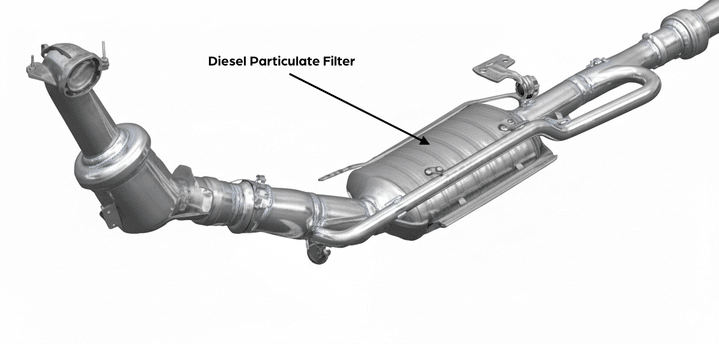
Every modern Land Rover diesel is fitted with a Diesel Particulate Filter (DPF). Its purpose is to trap the fine soot created during combustion, stopping it from being released into the air. Once collected, this soot stays in the filter until the exhaust system reaches the high temperatures needed to burn it away in a process called regeneration.
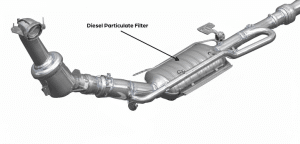
The system is effective, but it relies on the vehicle being driven in the right conditions. If a Land Rover is mostly used for short trips or slow-moving traffic, the exhaust often doesn’t get hot enough to complete regeneration. When this happens, soot begins to build inside the filter.
As the build-up grows, the filter becomes restricted and struggles to function as intended. At this stage, warning lights appear on the dashboard — and if left unresolved, the vehicle will eventually enter limp mode to protect the engine.
That’s why a DPF warning should never be ignored. What seems like a minor problem at first can quickly become a major issue, reducing power and risking costly repairs.
First Look at the Fault Codes – P2463 & P246B
When Mr C’s Land Rover came into our workshop, the dashboard was already showing two warning lights: the DPF light and the Engine Management Light. The vehicle had gone into limp mode, leaving it slow and difficult to drive.
Our first step was to connect the Land Rover to our dealer-level diagnostic equipment. The scan revealed two stored codes:
- P2463-00 – Diesel Particulate Filter restriction, soot accumulation. This confirmed the filter was badly restricted, with soot levels beyond the safe operating range.
- P246B-00 – Vehicle conditions incorrect for DPF regeneration. This showed the filter had been unable to regenerate, often the result of repeated short trips or slower journeys where the exhaust never reaches high enough temperatures.
For our technicians, these codes gave us an important starting point, but they didn’t tell the full story. A fault code highlights the symptom, not the root cause. At Smith’s of London in Croydon, we treat codes as the first step in diagnosis, not the conclusion.
The next stage was to carry out a structured investigation — checking each area that could have contributed to the fault before moving forward with the repair.
How Our Checks Confirmed the DPF Problem
With the fault codes revealed, the next step was to uncover the true cause of Mr C’s Land Rover’s problems. At Smith’s of London, our process is built around carrying out a series of thorough checks so we uncover the real cause.
Here’s how our technicians approached the case:
- Engine oil check – A blocked DPF often leads to failed regenerations, which can allow fuel to mix with the engine oil. In this Discovery Sport, the oil showed signs of dilution, meaning an oil and filter change would be essential later in the repair to protect the engine.
- Air filter inspection – A clogged or damaged air filter can reduce airflow, forcing the engine to run rich and create more soot. The air filter in this case was in good condition, so it was ruled out as a factor.
- DPF pressure readings – Using dealer-level diagnostic equipment, we measured the pressure across the filter. High readings confirmed that soot build-up was creating a significant restriction, consistent with the limp mode symptoms.
- Internal DPF check – We examined the filter for internal faults such as cracks or melting. None were found, which meant the DPF itself could be repaired rather than replaced.
- Intake and boost system inspection – Finally, we checked for leaks or weaknesses in the intake and turbo systems that might have contributed to the blockage. No faults were detected.
By working through each of these checks, we were able to confirm that the issue was a soot overload rather than a secondary fault. With the cause identified, the next step was to move on to repairing the Land Rover.
If your Land Rover is showing warning lights or struggling in limp mode, call our team on 020 8674 3377 for a professional diagnosis before the problem escalates.
How the DPF Repair Fixed the Land Rover

With our checks confirming a soot overload and signs of diluted oil, the next stage was to restore Mr C’s Discovery Sport to full working order. At this point, precision mattered — the repair had to follow a careful, step-by-step process to ensure the fault was resolved fully.
Here’s how our team carried out the repair:
- Oil and filter service – Because the oil had been contaminated with fuel, we replaced both the oil and filter. This ensured the engine was no longer running with compromised lubrication, protecting it from future wear.
- DPF clean and regeneration – We performed a controlled regeneration to burn away the soot build-up and clear the restriction inside the filter.
- Adaptations reset – Once soot levels had been reduced to within manufacturer specifications, we reset the system’s adaptations. This told the ECU the filter was clean and allowed future regenerations to function correctly.
- Fault memory clear and validation checks – Finally, we cleared the stored fault codes and ran validation checks. With no warnings present and the filter restored, the Land Rover was back to full performance.
Before returning the vehicle, we also explained to Mr C how certain driving habits can influence DPF performance. By understanding the conditions that allow regeneration to complete, he could help reduce the risk of the issue returning.
The Outcome – Fault Fixed and Reliability Restored
With the repair complete, Mr C’s Discovery Sport was back to full working order. The dashboard warnings had cleared, the DPF fault was gone, and the vehicle delivered the performance expected from a Land Rover.
For Mr C, the change was immediate. Instead of struggling with a sluggish drive, he left our workshop in a Land Rover that felt smooth, responsive, and dependable once again.
That’s the value of specialist care — resolving the root cause, carrying out the repair correctly, and returning the vehicle in a condition the driver can trust.
Trust Smith’s of London with Your Land Rover DPF Repair
If your Land Rover’s DPF light has appeared, don’t ignore it. These systems are complex and need specialist attention to avoid costly damage. At Smith’s of London in Croydon, our technicians use dealer-level equipment and proven expertise to find the real cause and repair it properly, first time.
We provide main dealer standards of care without the inflated price tag, giving you confidence that your Land Rover is in the right hands.
Why drivers choose Smith’s of London:
- Dealer-level repair methods and diagnostic tools
- Skilled technicians who trace the root cause, not just the symptom
- 12-month parts and labour guarantee on all repairs
- Transparent, itemised quotes with no hidden extras
We’re proud to hold a {{average-rating}}-star Google rating from {{review-count}} satisfied customers who rely on us for honest, expert service.
Whether your Land Rover is in limp mode, showing a DPF warning, or simply not performing as it should, call our team on 020 8674 3377 to book your appointment.