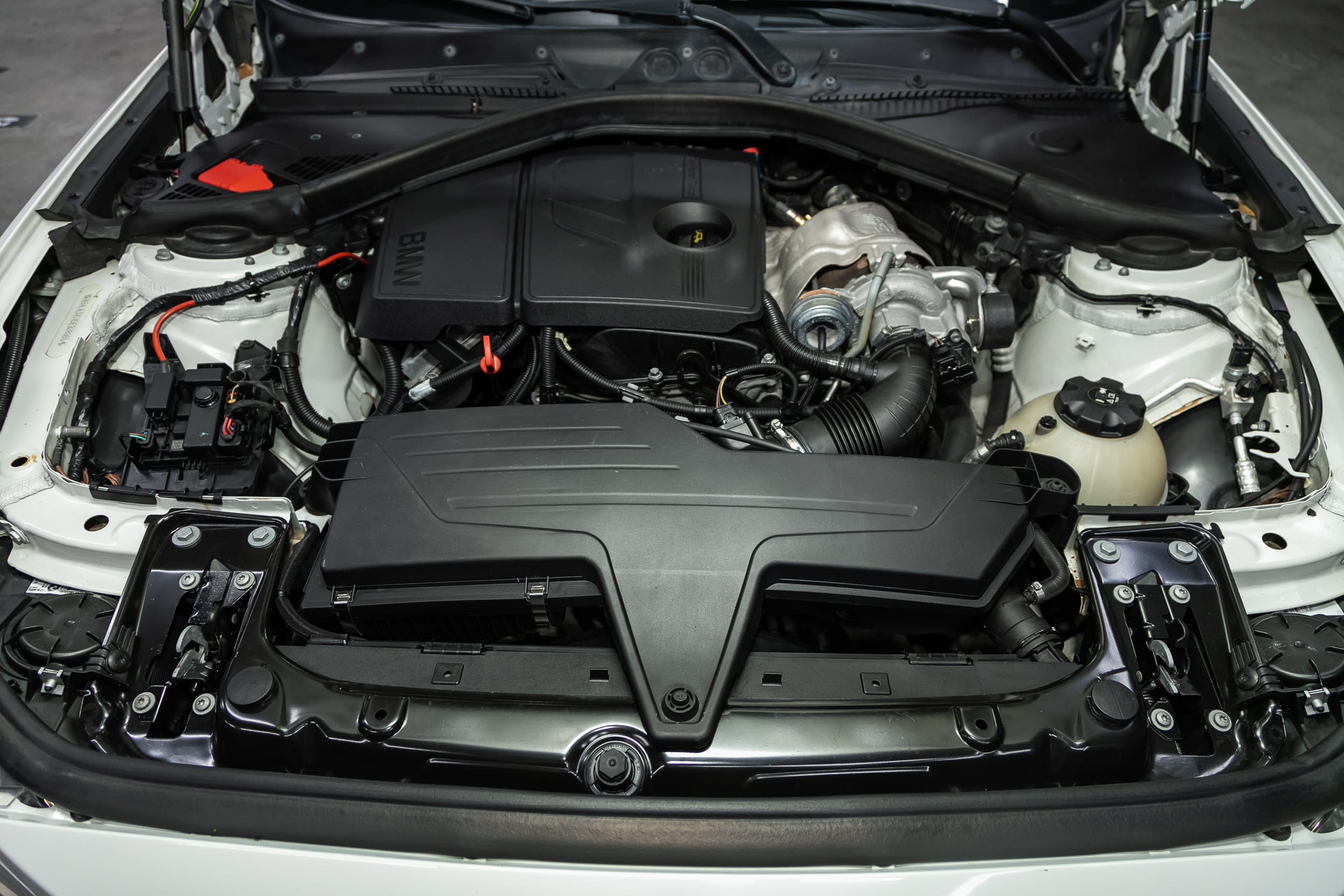
BMW Exhaust Camshaft Problem
“Something doesn’t quite make sense…”
That was the feeling shared by Mr B, who operates a local used-car dealership.
A customer had recently brought back a BMW 118i they’d purchased, explaining that the car was suffering from a BMW 118i rough idle along with an intermittent BMW engine warning light.
Previous checks carried out at the used-car dealership hadn’t revealed a clear cause.
With the issue unresolved and no obvious explanation for the uneven running, the BMW was brought to our team at Smith’s of London, Croydon, for further investigation.
Although the fault wasn’t immediately apparent, the symptoms Mr B experienced pointed towards an underlying engine issue that required a structured investigation. By following a methodical process, our BMW experts traced the concern back to a BMW exhaust camshaft issue affecting engine timing.
Throughout this blog, you’ll see how the fault was identified, what caused it, and how correct operation was restored.

Confirming the Cause of the BMW 118i Rough Idle
When the BMW 118i arrived at Smith’s of London, Croydon, our technicians followed the same structured process used for complex engine concerns, first listening carefully to Mr B’s account of the issue and then confirming the symptoms through systematic checks.
Mr B explained that the vehicle had been experiencing a BMW engine warning light, uneven running at idle, and occasional drivetrain malfunction messages. He hadn’t been able to identify the cause, so our role was to determine what the systems were indicating.
With this background, we carried out an initial assessment that included:
- A visual check under the bonnet to look for disturbed components or signs of recent work
- A full fault code scan using BMW manufacturer data to review stored and active fault codes
- A controlled engine start to observe idle behaviour
The visual checks didn’t reveal a clear explanation, so our team moved on to reviewing the system fault information.
The system scan highlighted two fault codes that were directly related to the symptoms:
- 130304 – VANOS exhaust cam jammed
- 160021 – Crankshaft sensor loss of synchronisation
(VANOS is BMW’s variable valve timing system, used to adjust camshaft position to support engine performance.)
Together, these codes told our experts three key things:
- There was a fault linked to the exhaust camshaft control within the VANOS system
- The crankshaft and camshaft were no longer synchronised correctly
- The BMW 118i rough idle and engine warning light were connected, not separate concerns
While these results aligned with the symptoms, fault codes alone don’t explain why the issue is present, so further investigation was required to understand the underlying BMW exhaust camshaft problem.
How we Traced the Source of the BMW Exhaust Camshaft Problem
With the initial checks confirming active VANOS and synchronisation faults, our next step was to investigate the BMW 118i engine timing system in greater detail. Issues within this area can stem from several causes, so a clear, evidence-led process was essential.
Using BMW technical data and guided testing procedures, our technicians followed a structured plan:
- Verifying engine timing electronically by comparing camshaft and crankshaft signals using an oscilloscope
- Removing the rocker cover and related components to allow direct inspection of the timing system
- Assessing the VANOS system to determine whether the issue originated with the valves, pulley, or camshaft
The oscilloscope results provided the first major breakthrough, showing a signal pattern consistent with incorrect exhaust camshaft timing and ruling out a purely sensor-related fault.
This led us to proceed with a mechanical inspection.
To confirm our findings, the rocker cover and high-pressure fuel injectors were removed, giving full access to the camshaft and timing components. This also allowed precise physical timing measurements to be carried out.
Both the electronic testing and physical inspection pointed to the same conclusion…
The exhaust camshaft wasn’t reaching the correct position in relation to the crankshaft.
Further checks focused on the systems responsible for adjusting and monitoring exhaust camshaft timing.
Two related issues were identified:
- A fault within the exhaust camshaft timing adjustment system was preventing correct positioning
- The exhaust camshaft position reference wasn’t being read accurately
As a result, the BMW engine control system couldn’t reliably match the requested camshaft position with the actual position. This led to incorrect valve timing, particularly at idle, triggering the BMW engine warning light, rough running, and the drivetrain malfunction message.
With the cause confirmed, the next step was to carry out repairs to restore correct camshaft timing and stable engine operation.
How Was the BMW Exhaust Camshaft Problem Repaired?
Once the cause had been confirmed, our BMW specialists explained the findings clearly to Mr B, outlining what was required to restore correct camshaft timing and stable engine operation.
This ensured he fully understood what was causing the issue and what work would be needed to put it right.
At Smith’s of London, Croydon, no repair work moves forward until everything has been discussed and agreed. That way, you stay in control of the decision-making process and are kept informed throughout.
After reviewing the recommendations, Mr B approved the repair to proceed.
With authorisation in place, our experts sourced high-quality BMW replacement parts and began the repair, following BMW procedures carefully at every stage.
The repair was completed in the following steps:
1. Removing the affected timing components
To access the faulty parts, the required upper engine components were removed in line with BMW repair guidance. This allowed the vehicle’s exhaust camshaft timing components to be removed safely and correctly.
2. Installing the replacement exhaust camshaft and timing components
The new exhaust camshaft and related timing parts were fitted in accordance with BMW manufacturer procedures. This ensured accurate positioning and reliable operation once installed.
3. Renewing associated timing-control components
Related timing-control components, including elements of the VANOS system, were renewed to support reliable camshaft operation once reassembled.
4. Setting and verifying engine timing
BMW timing tools were used to set and verify engine timing, ensuring the camshaft and crankshaft were synchronised correctly.
Reassembling the BMW engine
With the new parts installed and the timing confirmed, the engine was fully reassembled following BMW procedures, ensuring all components were refitted securely.
Once reassembly was complete, the BMW 118i was ready to proceed to the final stage of the repair process: the confirmation checks.
Verifying the BMW Exhaust Camshaft Repair Was Successful
Following completion of the repair, our BMW experts conducted a series of checks to confirm that the camshaft timing issue had been fully resolved and that the engine was operating as it should.
This final confirmation stage included:
- Checking camshaft and crankshaft timing after reassembly.
- Running system checks to confirm no related faults remained.
- Observing engine behaviour at idle and during a controlled road test.
These checks confirmed that camshaft timing was now correct, the BMW 118i rough idle had been resolved, and the BMW engine warning light no longer appeared.
Once testing was complete, Mr B was contacted to inform him of the outcome. He was pleased with the value provided and confident that the BMW was back to running as expected.
The vehicle left Smith’s of London, Croydon, running smoothly, with consistent idle quality restored and no further timing-related issues present.
BMW Exhaust Camshaft Issues? Book a BMW Check-Up at Smith’s of London
If your BMW 1 Series is showing signs such as rough idling or a BMW engine warning light, it’s important to have the issue assessed before it develops further.
BMW engine timing issues can arise in many different ways, and identifying the cause early can help reduce the risk of additional damage and more involved BMW 1 Series engine repair.
Accurate testing by experienced technicians is key to understanding what’s happening within your vehicle’s engine.
At Smith’s of London, Croydon, our team uses BMW technical data, manufacturer-grade technology, and experience to investigate issues such as BMW exhaust camshaft problems, BMW VANOS failure, and BMW engine timing issues.
Here’s why drivers across Croydon and the local area choose us for BMW engine repair:
- BMW manufacturer-level diagnostic equipment.
- Experienced technicians with in-depth BMW knowledge.
- 12-month parts and labour guarantee for added reassurance.
Join the {{review-count}} other drivers who’ve rated our garage {{average-rating}} stars on Google for accurate repairs and outstanding value.
If your BMW is showing signs of a timing issue or warning light, contact Smith’s of London in Croydon to book a BMW check-up. Our team will assess the issue and explain the next steps clearly.