A Range Rover P25A9 Fault
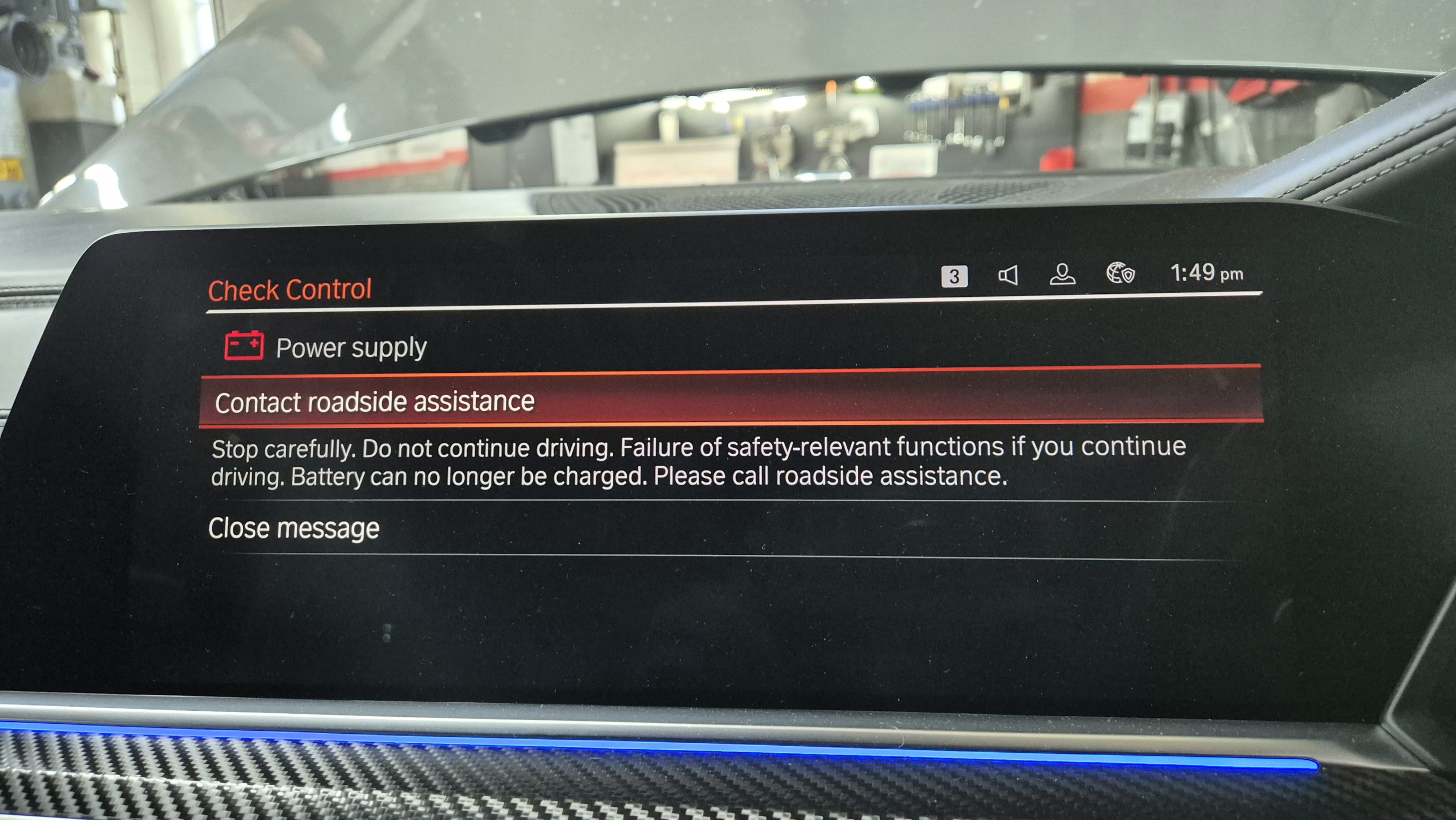
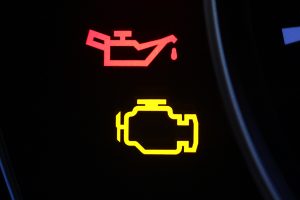
The warning came without any lead-up. Mr P’s 2018 Range Rover Velar had been performing normally when the engine management light appeared on the dashboard, accompanied by a warning message relating to the engine oil system.
For Mr P, seeing an engine management light alongside an oil-related warning was immediately worrying. The Range Rover Velar engine warning lights raised serious questions. What was wrong with the vehicle? Was it still safe to drive? And could continuing to use it make the problem worse?
Mr P, from Beckenham, contacted Smith’s of London in Croydon after a friend recommended the garage. He wanted the fault thoroughly investigated and a clear explanation of what was causing the warnings.
Mr P arranged to get the vehicle to us at the earliest opportunity.
What Did the Initial Assessment Reveal?
Mr P talked our technicians at Smith’s of London, Croydon, through what had happened. We asked when the warnings had first appeared, whether they had been constant or come and gone, and whether the vehicle had behaved any differently before the warnings appeared.
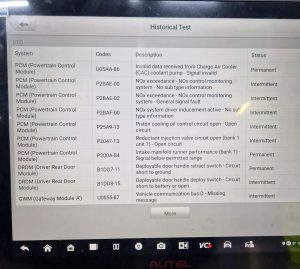
With Mr P’s account noted, our technicians connected dealer-level diagnostic equipment and completed a full system scan. The scan returned a single stored fault code:
- P25A9-13: Piston cooling oil control circuit open. An open circuit had been detected by the engine control module (ECM) in the electrical circuit of the piston cooling oil control valve.
The engine uses a set of oil jets inside the engine block to spray oil onto the underside of the pistons. This helps to control piston temperature. The piston cooling oil control valve controls the flow of engine oil to these jets. If the electrical circuit supplying the valve is interrupted, the ECM may not be able to actuate it correctly. Without proper valve function, oil flow to the piston cooling jets may not be controlled as intended.
That alone can trigger the engine management light and produce an oil-related warning message, even when the oil level is where it should be. The warning is linked to the engine’s ability to control oil flow to the piston cooling system, not necessarily to the oil level itself.
The fault code was confirmed and the warning pattern understood. Our technicians at Smith’s of London moved into a detailed diagnostic process to confirm what was behind the Range Rover P25A9 fault.
Tracing the Range Rover P25A9 Fault to Its Source
The stored code had given our technicians a clear direction for the P25A9 Range Rover diagnostic. An open circuit was confirmed, but the code alone couldn’t pinpoint where in the circuit the problem was. The wiring, connector, valve, or another section of the circuit could each have been at fault. Our technicians worked through each one systematically.
Step 1: Reviewing manufacturer technical information
Before any hands-on work began, our technicians reviewed the manufacturer’s technical information system. This covered known issues, technical service bulletins, recalls, and field remedies associated with the P25A9 fault on the Range Rover Velar.
- This gives our technicians the most current picture before physical testing begins.
Step 2: Wiring harness inspection
The wiring harness running to the piston cooling oil control valve was visually inspected for damage, chafing, corrosion, or any disturbance that could be responsible for the open circuit.
- The harness was intact, with no visible faults found.
Step 3: Connector and terminal pin assessment
Our technicians examined the electrical connector at the valve and the terminal pins within it. Corrosion, poor contact, or a pin that has shifted out of position can all result in an open circuit reading, even when the wiring is in good condition.
- The connector and terminal pins were in acceptable condition, with no corrosion or mechanical faults present.
Step 4: Oscilloscope analysis
Our technicians used an oscilloscope to test the electrical integrity of the wiring between the engine control module and the piston cooling oil control valve. This provided a clear picture of how the signal and supply were performing under live conditions, rather than relying on a static resistance check alone.
- The wiring tested within expected parameters, confirming the circuit between the control module and the valve was intact.
Step 5: Direct valve activation test
With the wiring, connector, and terminal pins all cleared, the valve itself was the remaining element to assess. Dealer-level diagnostic software was used to command the valve to activate while our technicians monitored its response.
- The valve did not respond as it should have. Testing indicated the valve had failed, confirming it as the root cause of the Range Rover P25A9 fault.
Each element of the circuit had been tested and cleared individually. The wiring and all connections were sound, and the evidence pointed to the valve as the failed component.
Replacing the Piston Cooling Oil Control Valve
With the root cause confirmed, our team at Smith’s of London contacted Mr P to explain what had been found. We took him through how each part of the circuit had been tested and cleared, and confirmed that the piston cooling oil control valve needed replacing. Mr P gave his approval, and the repair was started.
Here’s what was involved:
- The failed piston cooling oil control valve was removed from its position in the engine block. The valve is located beneath other engine components, requiring careful removal of surrounding parts to access it without disturbing adjacent systems.
- A new replacement valve was fitted and checked to confirm correct seating, sealing, and a secure electrical connection.
- The harness and connector were reconnected to the new component.
- All stored fault codes were cleared from the engine control module.
- Post-repair system checks confirmed the replacement valve was responding correctly to the engine control module.
- A final system scan verified no remaining fault codes and confirmed the oil-related warning message had cleared.
The Outcome of the Range Rover Oil Control Valve Replacement

The engine management light was off and the oil-related warning was gone. Mr P’s Range Rover Velar left Smith’s of London with the system fully verified and operating as it should.
The piston cooling oil control valve failure had been identified, replaced, and confirmed through post-repair checks. Mr P was pleased with the outcome: a careful, step-by-step investigation, a fault traced to a single failed valve, and the problem resolved completely in one visit. Our team at Smith’s of London kept communication clear throughout, so Mr P understood what had been found and what was being done at every stage.
For Mr P, choosing Smith’s of London meant a professional diagnostic process, a competitive repair cost, and a result he could trust. The Range Rover P25A9 fault had been properly identified and resolved.
Dashboard Warnings on Your Range Rover Velar? Get in Touch with Smith’s of London
If the engine management light on your Range Rover Velar has come on without explanation, or you’ve noticed an oil-related warning or a dashboard message you weren’t expecting, having the vehicle assessed promptly can prevent the issue from developing further.
At Smith’s of London, Croydon, our technicians have the experience and access to manufacturer technical information required to investigate and resolve Range Rover faults with confidence.
By choosing Smith’s of London, you benefit from:
- Specialists in complex diagnostic work and fault-finding.
- Dealer-level diagnostic equipment backed by manufacturer technical information.
- A careful, structured approach to every vehicle assessment.
- Competitive pricing compared to main dealer rates, with no compromise on quality.
- A 12-month parts and labour guarantee for peace of mind.
Join the {{review-count}} drivers who rate us {{average-rating}} stars on Google and trust Smith’s of London for professional, reliable vehicle care.
Call 020 8674 3377 today to book your assessment.