Diesel Particulate Filter Explained
DPF… Those three letters have a way of turning up uninvited, whether it’s on a dashboard warning light, in a conversation with a technician, or on a repair bill you weren’t expecting.
If you drive a modern diesel-engined car, you’re probably aware that it has a diesel particulate filter (DPF) fitted. You no doubt have questions like: What is it for? How does it clean itself? And what can go wrong?
Inside your exhaust, a diesel particulate filter (DPF) collects particulate matter (soot), stopping it leaving your car. A process called regeneration burns the trapped soot away whenever the engine and exhaust system reach and hold suitable temperatures. Short journeys are one of the most common reasons that doesn’t happen, faults can too, and missed regeneration leaves the filter increasingly restricted.
However, your vehicle’s DPF doesn’t operate in isolation. It forms part of your car’s diesel emissions system, so other components can influence how much soot reaches the filter, or trigger warnings that look like DPF problems.
That’s why we’ll cover those systems briefly too, to give you a fuller picture of what keeps your filter healthy.
Throughout this expert guide, you’ll uncover what your diesel particulate filter does, how regeneration keeps it clear, what else can affect it, and the habits that help it run as intended.
Why Is a Diesel Particulate Filter Fitted to Your Car?
The DPF sits within the exhaust system, where it captures soot before it leaves the vehicle
Since around 2009, a diesel particulate filter has been standard equipment on most diesel cars sold in the UK; Euro 5 emissions rules made fitting one effectively necessary. It’s fitted to the exhaust, helping trap soot from the engine before it leaves your car and enters the atmosphere.
Gradually, though, the filter fills. Left unchecked, that build-up can restrict it, which is why the DPF is designed to clean itself, burning away trapped soot at high temperature whenever the right conditions are met, so it keeps working as it should.
That self-cleaning ability, called regeneration, sits at the heart of everything else in this guide.
Euro 6 standards came next. Applying to all newly registered diesel cars from September 2016, they tightened the limits on nitrogen oxide (NOx) emissions and particulate matter. Most modern diesel vehicles bring together several emissions-control systems to comply, and within that line-up, the DPF plays a key role in controlling particulate emissions.
It’s also worth knowing about the MOT angle: since 2014, evidence of DPF removal, tampering, or emissions-related faults can result in a failure.
That’s the diesel particulate filter explained. Next, we’ll dig into regeneration itself and the conditions that allow it to run to completion.
How Does a DPF Work? Burning Soot Away Without You Noticing
So, how does a DPF work in day-to-day driving? A honeycomb-like structure, in most cases made from ceramic, sits inside the filter and catches soot as exhaust gases flow past. The design is effective, but effectiveness has a cost: the filter gradually fills.
Your car’s answer is to clean the filter automatically when conditions allow, in a process called regeneration.
There are usually two main forms of regeneration:
- Passive regeneration: Occurs naturally when exhaust temperatures remain high enough for long enough to burn away the accumulated soot. Usually, sustained high-speed driving is the practical setting for this, and most drivers won’t notice it.
- Active regeneration: The engine management system triggers it when the soot level in the DPF reaches a set threshold, raising exhaust temperatures through a range of engine management strategies. A slight change in engine note, or a rise in fuel consumption, is what some drivers pick up on.
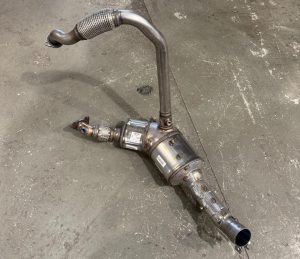
A removed DPF and exhaust assembly ready for inspection and servicing
There’s a catch worth knowing about…
Here’s what happens if the engine is switched off mid-cycle: regeneration is interrupted, and some of the trapped soot may remain in the filter.
Repeat that pattern, and the soot level can keep climbing; a DPF warning light may eventually appear.
Reaching and maintaining the right operating conditions is what both main regeneration methods need to burn away accumulated soot, which is one reason regular longer journeys can help. That’s the diesel particulate filter explained in practice; next comes the question at the heart of DPF health.
The Short-Trip Problem: What Your Driving Pattern Means for Your DPF
Understanding “Why does my diesel car need long journeys?” is one of the most important parts of owning a diesel.
So what does this mean for you? It comes down to the conditions regeneration needs.
School-run loops and other stop-start trips around town can end before the exhaust system has reached, let alone held onto, what regeneration needs to finish.
Each interruption leaves a little more soot behind; let that repeat, and warnings may follow, bringing the need for professional attention with them.
Specific temperature and operating conditions are what your vehicle’s DPF was designed around, and a longer continuous journey is where they’re more likely to be achieved.
If a DPF warning light has already appeared on your vehicle, our experts at Smith’s of London, Croydon, can assess your DPF and advise on the next steps.
How the Wider Diesel Emissions System Can Affect Your DPF
Your DPF is part of your vehicle’s wider diesel emissions system. So let’s start with your car’s EGR (Exhaust Gas Recirculation) valve. Its role in reducing harmful emissions is to send a portion of exhaust gas back into the engine.
Carbon, formed from soot and oil vapour, can settle in the valve over the months and years, leaving it restricted, slow to respond, or stuck.
Why does that matter for your DPF?
An EGR-related issue can, depending on the nature of the fault, push soot production up and potentially add extra strain to the DPF.
It’s also worth noting that a diesel vehicle registered after September 2016 is likely to carry an AdBlue system.
So what is AdBlue and why does it matter for your diesel emissions?
It’s a fluid that gets injected into the exhaust system, supporting the SCR (Selective Catalytic Reduction) catalyst as it converts nitrogen oxides into nitrogen and water vapour.
Your car monitors AdBlue fluid levels and warns you when it’s low; on some vehicles, a system fault, or running out altogether, can restrict performance or prevent the engine from restarting. Because these warnings can sometimes look like DPF symptoms, an expert diagnosis may need to take in both systems.
Dashboard Clues: Warning Signs of a DPF That Needs Attention
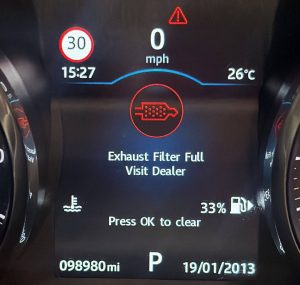
A DPF or exhaust-filter warning should be investigated rather than repeatedly ignored
A DPF fault won’t necessarily make itself obvious, but your car usually gives you clues:
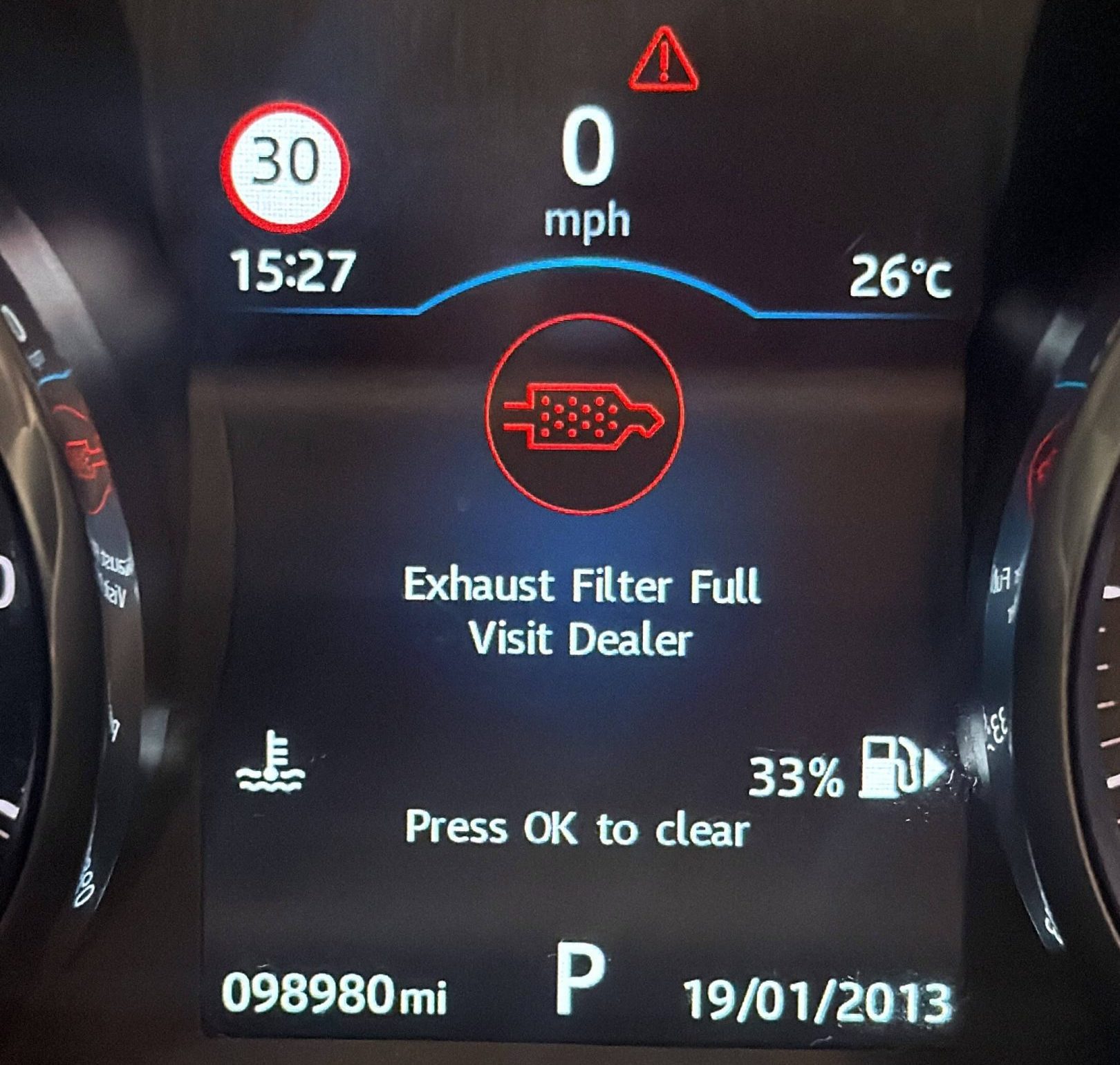
- DPF warning light on the dashboard: Soot accumulating beyond the expected level can switch this on, and so can a detected fault in the DPF or in the systems responsible for monitoring and managing it.
- Reduced engine power or limp mode: The engine management system can pull performance back when it detects a fault affecting engine operation or emissions control.
- Increased fuel consumption: Each interrupted regeneration attempt can cost extra fuel, so repeated incomplete cycles can nudge consumption upward.
- Unusual exhaust smell or visible smoke: Either can point to a fault affecting the engine or emissions system; both deserve investigation.
There’s overlap among these clues, and the DPF isn’t behind all of them. With several systems operating alongside the filter in a modern vehicle, pinning down the cause accurately is a job for an expert’s assessment.
Noticed any of the above? Our experts at Smith’s of London, Croydon, would be glad to take a closer look at your DPF.
Looking After Your Vehicle’s DPF Day to Day
The good news? There’s no need to understand the engineering behind your vehicle’s DPF to take care of it. However, these three routines make a noticeable difference:
- Build in longer journeys where you can: A longer, uninterrupted run gives the engine and exhaust system the time they need to reach the conditions for regeneration, letting accumulated soot burn away.
- Don’t ignore a DPF warning light: Promptly investigate it, as the underlying issue can worsen if diagnosis is delayed.
- Find an expert garage: One component may get flagged by the warning, yet the root cause can lie elsewhere; an accurate assessment by an expert settles it.
With the diesel particulate filter explained and a clearer sense of how to maintain it, you’ll be better placed to recognise potential issues early.
Why Choose Smith’s of London, Croydon, for DPF Care?
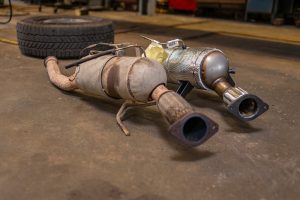
Depending on the fault and condition of the filter, DPF treatment may involve regeneration, cleaning or replacement
You’ve had the diesel particulate filter explained; the question now is who to trust with a suspected fault. That’s where the right garage and experts come in.
A DPF fault isn’t necessarily the full story… What appears to be a single filter problem can sometimes prove more complex, because many of the same symptoms can stem from faults elsewhere in the diesel emissions system. That’s why only an accurate assessment by an expert will do.
The technicians at Smith’s of London, Croydon, pair years of experience with manufacturer-level technology and proven processes, investigating DPF and emissions-system faults accurately. Where a repair is appropriate, our technicians can take on DPF-related work, regeneration procedures, cleaning, or replacement, in accordance with the manufacturer’s repair guidance.
Choose Smith’s of London and you benefit from:
- Our team uses the same technology and reference data as the main dealerships.
- A 12-month parts and labour guarantee on the work we carry out.
- You’ll know exactly what’s needed and what it costs before we touch anything.
- Experts serving Croydon, Beckenham, and Coulsdon.
Join the {{review-count}} customers who’ve rated us {{average-rating}} stars on Google for expertise, friendly service and excellent value.
Call 020 8674 3377 to book your DPF assessment with Smith’s of London, Croydon, today.
Answers to Common DPF Questions
What is a diesel particulate filter and why does my car have one?
A DPF is fitted to the exhaust of your diesel vehicle, helping capture particulate matter (soot) and prevent it from reaching the atmosphere. Most diesel cars sold in the UK from around 2009 onwards have one fitted, and removal or tampering can lead to an MOT failure.
So how does a DPF work? Regeneration keeps the filter clear, burning trapped soot away at high temperature once conditions allow. There are usually two main methods of regeneration, passive and active. The passive kind relies on exhaust temperatures remaining high enough on their own, while the active kind is initiated by the engine management system once soot loading reaches a set threshold.
Why does my diesel car need long journeys to stay healthy?
Burning soot away calls for suitable exhaust temperatures, which your DPF is more likely to hold during longer, uninterrupted journeys driven at a steady speed. Driving around towns on short journeys can deny the regeneration process the conditions it needs, allowing soot to accumulate. A fault within the emissions system is another thing that can prevent regeneration from completing.
How do I know if my DPF is blocked?
One of the most common signs of a blocked DPF is a DPF warning light on the dashboard. Reduced power, increased fuel consumption, or a change in how the engine runs can show up alongside it.
None of these proves the filter is blocked on its own, as other issues can produce matching symptoms; an assessment makes sense. Our team at Smith’s of London, Croydon, is happy to investigate and advise.
Can a DPF be repaired, or does it need replacing?
Whether a DPF can be repaired or not depends on the condition of your vehicle’s DPF and the cause of the fault. In many cases, full replacement isn’t needed, and a restricted DPF can be restored. Our team at Smith’s of London, Croydon, can examine yours and recommend the right approach.