Mercedes Timing Chain Rattle
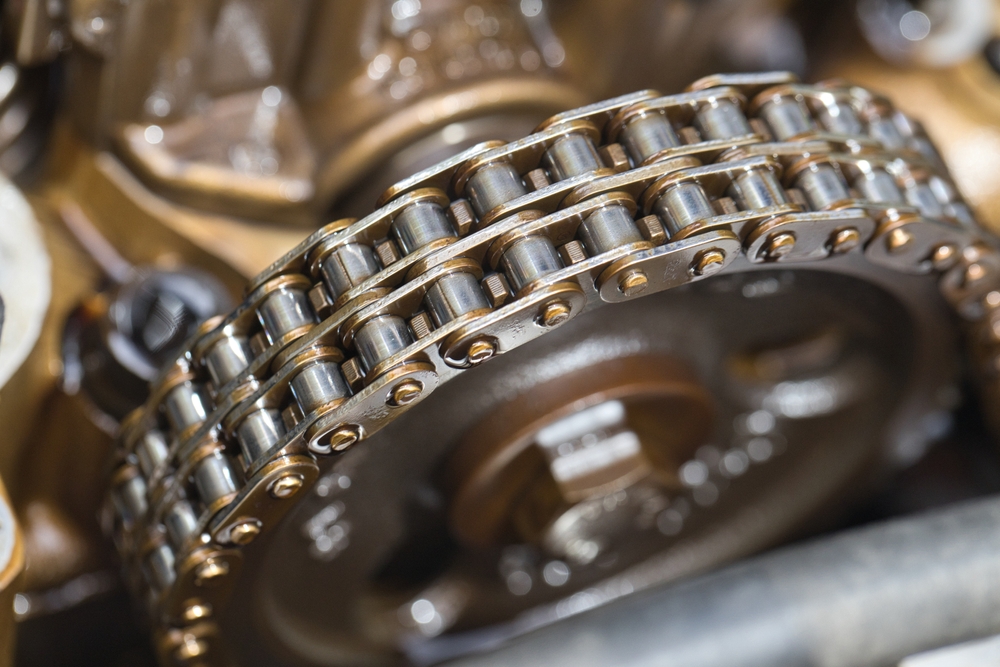
A customer brought their Mercedes C220d to Smith’s of London with what they described as a brief rattle at startup. Nothing dramatic. Just a metallic noise that appeared the moment the engine fired and vanished within a few seconds. No warning lights had illuminated. The car drove perfectly once underway. What we found during the assessment told a very different story.
That scenario is far from unusual. A Mercedes timing chain rattle may sound minor, but it signals that internal wear in the timing chain assembly has progressed to the point where at least one component is no longer maintaining tension as the engine starts. The tensioner, the guide rails, the chain are all candidates. From the driver’s seat, there is no way to identify which one is responsible.
The information in this article applies specifically to the 2.0-litre OM654 diesel engine fitted to C-Class, E-Class, GLC, and GLE models from around 2016 onwards. Smith’s of London, Croydon, works on this engine regularly, and timing chain system faults in the OM654 are well documented. If your Mercedes uses a different engine, different factors may apply, but any new noise is worth having assessed.
What causes a Mercedes timing chain to rattle? A Mercedes timing chain rattle is typically caused by wear within the timing chain system. Common causes include tensioner wear, guide rail degradation, and chain elongation. The rattle tends to be most noticeable on cold starts. Because multiple components can be responsible, a thorough technical evaluation is essential to identify the root cause before any repair work begins.
Inside the Engine: What the Timing Chain Controls
Every combustion cycle depends on two groups of rotating components working as one. The crankshaft harnesses piston force to produce rotation. The camshafts dictate when the intake and exhaust valves open and close, governing airflow through each cylinder.
The timing chain joins these two groups. It runs within the engine from crankshaft to camshafts, locking their rotation into the precise relationship that correct combustion requires. Accurate timing means the engine runs as it was engineered to. A drift in timing means the engine operates less effectively and the risk of mechanical harm grows.
The chain is not self-regulating. A hydraulic tensioner, fed by engine oil pressure, holds the chain taut. Guide rails keep it travelling along an exact path. Sprockets on each shaft engage the chain links. Wear in any of these supporting elements allows the chain to move beyond its designed limits, and that unwanted movement is the source of the noise owners hear on cold starts.
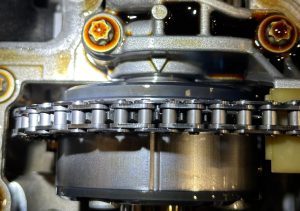
A close-up of the Mercedes timing chain and camshaft sprocket with the engine opened for inspection
Tracing the Rattle to Its Source: Key Causes of Timing Chain Wear
The rattle is evidence of lost tension. The question that shapes the entire repair is which component has failed and how far the damage extends. Each part of the system wears differently.
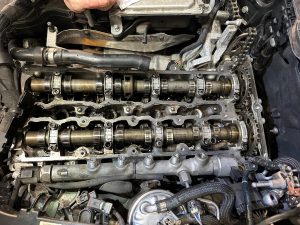
An exposed Mercedes engine during timing system inspection
- Tensioner wear. Oil retained inside the tensioner housing is what keeps the chain taut between engine starts. A check valve or sealing surfaces stop that oil from draining while the engine is off. When those internal surfaces degrade with age, oil bleeds away during periods of standing. The result is a chain that runs unsupported for the first few seconds of the next start, until oil pressure restores the tensioner. That brief window of excess movement is responsible for a significant share of Mercedes timing chain noise cold start issues.
- Guide rail deterioration. The chain is steered through the engine by guide rails made of plastic or composite material. Heat cycling and high mileage progressively weaken them, leading to cracks and increased brittleness. Once a rail can no longer constrain the chain along its correct route, the chain gains unwanted freedom and the resulting play generates audible noise.
- Chain elongation. Each link in the chain contains pins and bushings that undergo microscopic wear across tens of thousands of miles. The chain does not stretch; it gains effective length as tiny clearance develops at every joint. When total elongation surpasses the tensioner’s compensating range, slack enters the system and stays until the chain is replaced.
- Oil quality and pressure. Clean oil at the correct pressure is the foundation the entire assembly relies on. Oil that has degraded or been left unchanged too long weakens the protection every component needs, accelerating wear across the full system.
These faults don’t tend to develop independently. A tensioner that has lost its holding capacity allows the chain to move more freely, which in turn wears the guide rails at a faster rate. Degraded oil compounds every issue at the same time. A thorough technical evaluation is the only way to establish the full scope of what has worn and plan the repair accordingly.
Hearing a Mercedes timing chain noise cold start each morning? Call Smith’s of London on 020 8674 3377 and we can advise on the next step.
Recognising a Timing Chain Rattle Among Other Engine Sounds
Not every noise at startup signals a timing chain issue. The engine produces a range of sounds in those first moments, and understanding what sets a timing chain rattle apart helps you decide when to act.
The telltale sign is a rapid metallic chattering from the front of the engine, appearing the instant the engine fires and fading within a few seconds as oil pressure builds. It is loudest after overnight standing and becomes less pronounced once the tensioner recovers its grip.
What differs from vehicle to vehicle is the quality of the noise. A fine, rhythmic tapping in some; a deeper metallic tone in others. That variation tells an experienced technician which component has deteriorated and to what degree.
So what does that mean in practice? Any new metallic sound at startup that was not there previously warrants professional assessment. Our technicians at Smith’s of London can separate a timing chain rattle from other cold start noises, pinpointing the actual origin before any repair is recommended.
If your Mercedes does not sound right on startup, get in touch with Smith’s of London, Croydon.
What Is at Stake If a Timing Chain Rattle Goes Unaddressed
There is no point at which timing chain wear stabilises on its own. Every engine cycle adds to it. A noise that began on the coldest mornings starts showing up after shorter periods of rest, lasting longer, becoming more pronounced with each passing week.
What makes it worse? Your Mercedes has an interference engine, meaning the valves and pistons share the same physical space at alternating points in the combustion cycle. The timing chain alone prevents them from meeting. If wear causes valve timing to stray far enough from its design position, contact between valves and pistons is the result. Bent valves, scored pistons, and a repair bill that can surpass the vehicle’s market value are the potential consequences.
The good news? A Mercedes timing chain replacement completed before secondary damage sets in is a well-understood repair for an experienced team, costing significantly less than what total engine failure would demand.
If you have started hearing that rattle, call Smith’s of London on 020 8674 3377 before a contained repair becomes something far more serious.
Which Mercedes Diesel Models Commonly Develop This Fault?
The OM654 2.0-litre diesel engine is at the centre of most Mercedes diesel timing chain faults. Fitted across a range of models from around 2016, it has a documented history of timing chain system issues. The tensioner is the component most frequently implicated, though the guide rails and chain itself are also susceptible. The fault sits with the engine architecture rather than with any individual model.

The OM654 diesel engine is fitted across a range of Mercedes models, including the C-Class
Smith’s of London sees this fault most often in:
- C-Class (C200d, C220d, C300d)
- E-Class (E200d, E220d, E300d, E400d)
- GLC (GLC 200d, GLC 220d, GLC 300d)
- GLE (diesel variants)
This is not an exhaustive list. Any vehicle sharing the same engine can develop the same Mercedes diesel timing chain issues.
Smith’s of London, Croydon, can verify whether your model carries this engine and assess the timing chain system. We also serve Mercedes owners across Croydon, Beckenham, Coulsdon, and the surrounding area.
How Smith’s of London Approaches a Timing Chain Investigation
The noise confirms that something in the timing chain system requires attention, but identifying exactly what has worn and to what extent is the step that defines the repair. At Smith’s of London, Croydon, no work is authorised until that picture is complete.
Your description of the noise forms the starting point. When you first heard it, how it has evolved, and whether it appears only after extended standing or on shorter rests all help shape the assessment before any dismantling begins.
Our technicians then perform a thorough technical evaluation using manufacturer software and direct physical inspection. The tensioner, guide rails, chain wear, and oil condition are each reviewed in a structured sequence to determine the full extent of the fault.
The bottom line? You receive the complete findings together with an itemised quote. No work starts until you have given your go-ahead. The repair addresses all components that have deteriorated: chain, tensioner, guide rails, and any associated parts. After the repair, the engine is run-tested and the timing chain system verified.
A Mercedes timing chain replacement is substantial work, but well within the capability of an experienced team. Carried out before secondary damage occurs, it prevents far greater expense down the line.
Why Mercedes Owners in Croydon Choose Smith’s of London
When a timing chain rattle demands answers, Smith’s of London, Croydon, provides them. We examine the complete timing chain system, report our findings clearly, and provide an itemised quote before any work begins. Choosing Smith’s of London means you benefit from:
- Dealer-level software with full access to Mercedes technical information.
- A 12-month parts and labour guarantee on all work carried out.
- Competitive pricing with no compromise on quality.
- Serving Mercedes owners across Croydon, Beckenham, Coulsdon, and the surrounding area.
{{review-count}} Google reviews and a {{average-rating}}-star rating tell the story of the service we provide.
If you have noticed a cold start rattle, or your Mercedes does not sound the way it should, call Smith’s of London on 020 8674 3377 today. The earlier it is assessed, the more contained the repair.
Frequently Asked Questions About Mercedes Timing Chain Rattle
How do I know if the startup noise is a timing chain fault?
Listen for a metallic chattering or brisk tapping from the front of the engine in the first moments after a cold start. If the noise has started lasting longer or surfacing after shorter rest periods, the wear may be advancing. A thorough technical evaluation at Smith’s of London will confirm the source and identify which components need attention.
What happens if the timing chain rattle is not addressed?
Your Mercedes has an interference engine. The valves and pistons share the same space at different stages of the cycle. If timing chain wear allows valve timing to shift, contact between valves and pistons can occur, resulting in serious internal engine damage. Call Smith’s of London on 020 8674 3377 to arrange an assessment.
Is it always necessary to replace the entire timing chain system?
Not always. The tensioner, guide rails, and chain are each assessed individually during a thorough technical evaluation. Only the parts that have deteriorated are replaced, ensuring the repair is targeted and nothing is left unaddressed.
Is transport available while the work is carried out?
Smith’s of London does not currently offer a courtesy car, but we are happy to discuss alternative transport arrangements when you book your vehicle in.
Call Now 020 8674 3377Save on Mercedes Servicing